

Toxic Plants for Dogs and Cats: A Comprehensive Guide to Protect Your Pets
Having plants at home or in the garden can be relaxing and enhance the environment, but many of them pose a danger to our furry companions. Dogs and cats are naturally curious and tend to explore their surroundings, which includes chewing or ingesting plants, sometimes with serious consequences. Below is a list of the most dangerous plants for dogs and cats, along with symptoms of poisoning and prevention tips.
Highly Toxic Plants for Dogs and Cats
-
- Yew (Taxus baccata)
- Toxicity: Contains taxines, highly toxic alkaloids found in all parts of the plant, especially in the seeds.
- Symptoms: Tremors, breathing difficulties, seizures, collapse, sudden death.
- Azalea (Rhododendron spp.)
- Toxicity: Grayanotoxins in this plant affect the cardiovascular and neurological systems of pets.
- Symptoms: Vomiting, diarrhea, excessive salivation, weakness, arrhythmias, coma.
- Hydrangea (Hydrangea spp.)
- Toxicity: Contains cyanide-like substances, which can cause digestive and respiratory issues if ingested in large quantities.
- Symptoms: Vomiting, diarrhea, difficulty breathing, lethargy, seizures.
- Yew (Taxus baccata)
- Marijuana (Cannabis sativa)
- Toxicity: THC, the psychoactive component of marijuana, is highly toxic to dogs and cats.
- Symptoms: Vomiting, instability, lethargy, hypothermia, seizures, coma.
- Castor Bean (Ricinus communis)
- Toxicity: Contains ricin, an extremely dangerous toxin even in small amounts.
- Symptoms: Vomiting, bloody diarrhea, fever, seizures, organ failure.
- Lavender (Lavandula spp.)
- Toxicity: Though of low toxicity, excessive consumption of lavender can cause gastrointestinal problems.
- Symptoms: Nausea, vomiting, loss of appetite, lethargy.
- Hops (Humulus lupulus)
- Toxicity: Especially toxic to dogs, affecting their nervous system and causing hyperthermia.
- Symptoms: Vomiting, agitation, seizures, high fever, respiratory failure.
- Elderberry (Sambucus spp.)
- Toxicity: The green parts of the plant contain cyanogenic glycosides, which release cyanide when consumed.
- Symptoms: Vomiting, diarrhea, difficulty breathing, weakness, organ failure.
- Lilies (Lilium spp.)
: Extremely dangerous for cats; even exposure to small amounts can cause kidney failure.
- Symptoms: Vomiting, lethargy, loss of appetite, kidney failure.
- Cyclamen (Cyclamen spp.)
: The entire plant is toxic, but the tubers are the most dangerous.
- Symptoms: Excessive salivation, vomiting, diarrhea, seizures.
- Daffodil (Narcissus spp.)
: The bulb is the most toxic part, and can cause severe gastrointestinal issues and heart problems.
- Symptoms: Vomiting, diarrhea, abdominal pain, arrhythmias.
- Dieffenbachia
: Known as “dumb cane,” it contains calcium oxalate crystals that irritate the mouth and digestive tract.
- Symptoms: Mouth inflammation, excessive salivation, difficulty swallowing, vomiting.
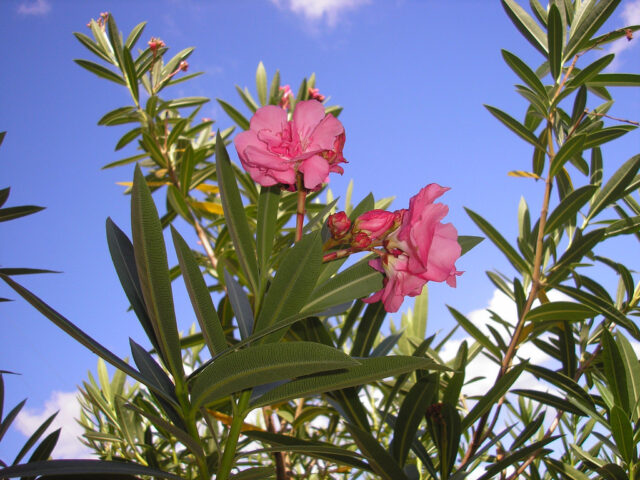
- Oleander (Nerium oleander):
Contains cardiac glycosides that directly affect the heart.
- Symptoms: Vomiting, diarrhea, altered heart rate, tremors, and in severe cases, death.
- Sago Palm (Cycadales sp.)
: The seeds of this plant are the most dangerous, containing cycasin, a toxin that affects the liver.
- Symptoms: Vomiting, bloody diarrhea, lethargy, liver failure, seizures, and it can be fatal if not treated promptly.
- Aloe Vera (Aloe barbadensis miller)
: While the gel inside the plant has medicinal properties for humans, the plant is toxic to pets due to its saponins.
- Symptoms: Vomiting, diarrhea, lethargy, changes in urine color.
- Poinsettia (Euphorbia pulcherrima)
: Although the toxicity is mild compared to other plants, contact with the milky sap can irritate the mouth and stomach.
- Symptoms: Oral irritation, mild vomiting, salivation.
- English Ivy (Hedera helix)
: The leaves contain triterpenoid saponins, which can result in gastrointestinal irritation.
- Symptoms: Vomiting, diarrhea, abdominal pain.

General Symptoms of Plant Poisoning
Symptoms of poisoning can vary depending on the plant, the amount ingested, and the species of the pet. Some of the most common symptoms include:
- Vomiting and diarrhea
- Lethargy or weakness
- Excessive salivation
- Difficulty breathing
- Tremors or seizures
- Changes in heart rate
- Irritation in the mouth or throat
What to Do if Your Pet Ingests a Toxic Plant
If you suspect that your dog or cat has ingested a poisonous plant, contact your veterinarian immediately. It is crucial to act quickly in cases of poisoning, as some of these toxins work fast and can have serious consequences.
Prevention
- Know the plants in your environment: Make sure to identify all the plants you have at home or in the garden. If any are toxic, consider removing them or placing them out of reach of your pet.
- Supervision: Prevent your pet from accessing areas with dangerous plants, especially if they are young or very curious.
- Education: Consult your veterinarian about which plants are safe and which are not for your pet.

Conclusion
Toxic plants pose a hidden danger in many homes and gardens. While having plants is beneficial for the home environment, it is important to understand the risks that some species represent for our pets. The best prevention is to keep pets away from these plants and be vigilant for any signs of poisoning. If you notice your dog or cat showing any symptoms, do not hesitate to visit the veterinarian to ensure their well-being.