

Congenital and hereditary diseases are health disorders with a genetic basis, meaning they are inherited from the parents and can manifest from birth or develop throughout the dog’s life. Many dog breeds are susceptible to these conditions due to selective breeding, which can lead to significant health problems if not properly identified and treated.
Below are some of the most common diseases associated with specific breeds, along with their symptoms, diagnostic tests, and available treatments.
1. Hip Dysplasia
Affected breeds: German Shepherd, Labrador Retriever, Golden Retriever, English Bulldog, Rottweiler.
Symptoms:
-
Limping or stiffness in the hind legs.
-
Difficulty rising or walking after resting.
-
Obvious pain when moving the hips or legs.
-
In advanced cases, loss of mobility.
Diagnostic tests:
-
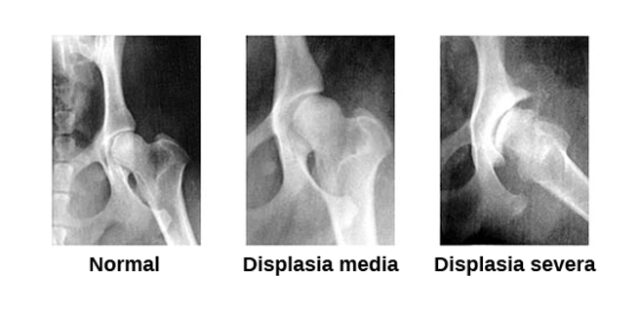
X-rays: The main tool for diagnosing hip dysplasia. X-rays allow visualization of abnormal development of the hip joint.
-
Physical exam: The veterinarian can perform a physical evaluation and palpate the hips to detect pain or movement abnormalities.
Treatment:
-
Non-steroidal anti-inflammatory drugs (NSAIDs): To reduce pain and inflammation.
-
Joint supplements: Such as glucosamine and chondroitin, which help maintain joint health.
-
Surgery: In severe cases, surgery may be necessary, such as double pelvic osteotomy or even hip replacement.
-
Weight management: Maintaining a healthy body weight is essential to avoid overloading the joints.
2. Elbow Dysplasia
Affected breeds: Labrador Retriever, Golden Retriever, Rottweiler, Doberman Pinscher, Boxer.
Symptoms:
-
Limping or difficulty walking, especially after exercise.
-
Stiffness in the elbow joints.
-
Pain when moving the front legs.
-
In severe cases, muscle atrophy in the front limbs.
Diagnostic tests:
-
X-rays: Needed to observe changes in the elbow joint.
-
Arthroscopy: A minimally invasive surgical procedure that allows examination of the joints and performing biopsies if necessary.
-
Physical exam: To evaluate the range of motion of the elbow joints.
Treatment:
-
Anti-inflammatories and analgesics: To relieve pain and inflammation.
-
Joint supplements: Help improve joint health.
-
Surgery: In some cases, surgery is needed to repair or remove bone fragments.
-
Physiotherapy: To improve mobility and strengthen the muscles around the joint.
3. Heart Diseases (Hereditary Cardiopathies)
Affected breeds: Cavalier King Charles Spaniel, Doberman Pinscher, Boxer, French Bulldog.
Symptoms:
-
Persistent cough or difficulty breathing.
-
Fatigue or lack of energy during exercise.
-
Fainting or syncope (temporary loss of consciousness).
-
Distended abdomen due to fluid accumulation (edema).
Diagnostic tests:
-
Echocardiogram: Allows visualization of the heart and its valves to detect structural or functional abnormalities.
-
Electrocardiogram (ECG): Used to detect arrhythmias or heart rate problems.
-
Thoracic radiographs: To observe heart size and the presence of fluid in the lungs.
-
Blood tests: To check kidney and liver function, which can be affected by heart disease.
Treatment:
-
Medications: ACE inhibitors, beta-blockers, and diuretics are commonly used to control blood pressure and heart rate.
-
Surgery: In some cases, such as defective valves, surgical intervention may be necessary.
-
Diet control: Low-salt diets and weight management.
4. Progressive Retinal Atrophy (PRA)
Affected breeds: Cocker Spaniel, German Shepherd, Miniature Schnauzer, Collie.
Symptoms:
-
Gradual loss of vision, initially in low-light conditions.
-
Disorientation or bumping into things in new environments.
-
Dilated pupils and slow response to light.
-
Complete blindness in advanced stages of the disease.
Diagnostic tests:
-
Electroretinogram (ERG): Measures the electrical activity of the retina to detect abnormalities.
-
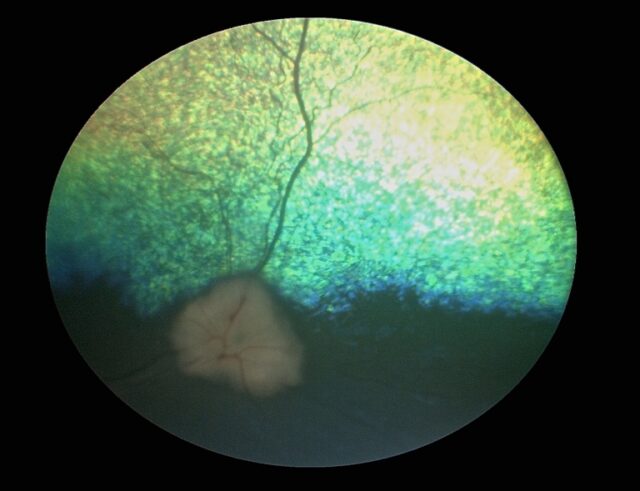
Ocular exam: A veterinary ophthalmologist can observe retinal changes and other signs of PRA.
-
Genetic tests: Some tests can determine if a dog is a carrier of PRA-related genes.
Treatment:
-
No cure: There is no treatment to reverse PRA, but affected dogs can live comfortably with environmental adaptation.
-
Ocular supplements: Some antioxidant-rich supplements may help slow disease progression.
-
Environmental modifications: Keep the home safe by removing obstacles and using additional lighting.
5. Congenital Adrenal Hyperplasia (CAH)
Affected breeds: Beagle, Basset Hound, West Highland White Terrier.
Symptoms:
-
Unexplained weight loss.
-
Chronic vomiting and diarrhea.
-
Lethargy and muscle weakness.
-
Dehydration and increased water consumption.
Diagnostic tests:
-
ACTH stimulation test: Measures the adrenal glands’ response to adrenocorticotropin, a hormone that regulates cortisol production.
-
Blood and urine tests: To evaluate electrolyte levels and kidney function.
-
Abdominal ultrasound: May help visualize the adrenal glands.
Treatment:
-
Corticosteroid therapy: To replace hormones not adequately produced.
-
Regular monitoring: To adjust medication doses as needed.
-
Special diet: Diets tailored to the needs of dogs with hormonal problems.
6. Subluxated Lens Syndrome (Lenticonus)
Affected breeds: Shar Pei, Collie, Chihuahua, Scottish Terrier.
Symptoms:
-
Cloudiness in the eye or loss of visual clarity.
-
Eye irritation or redness.
-
Excessive blinking or eye scratching.
-
Progressive vision loss.
Diagnostic tests:
-
Eye exam: A veterinary ophthalmologist can detect lens subluxation.
-
Ocular ultrasound: May be used to examine the structure of the eye and lens position.
-
Clinical evaluation: To assess symptoms and severity of the condition.
Treatment:
-
Eye surgery: In severe cases, the lens may be removed or replaced with an artificial one.
-
Medications: To reduce inflammation and prevent infections.
-
Eye care: Keep a clean environment and monitor vision.
7. Hereditary Kidney Diseases
Affected breeds: Bull Terrier, Dachshund, Samoyed, Shih Tzu.
Symptoms:
-
Increased thirst and urination.
-
Vomiting and diarrhea.
-
Weight loss and decreased appetite.
-
Lethargy and weakness.
Diagnostic tests:
-
Blood and urine tests: To evaluate kidney function and levels of creatinine and urea.
-
Renal ultrasound: To observe kidney structure and check for lesions or size changes.
-
Kidney biopsy: In severe cases, may be necessary to confirm the diagnosis.
Treatment:
-
Medications: To control blood pressure and improve kidney function.
-
Special diet: Low-protein, low-phosphorus diets help reduce kidney workload.
-
Hydration: Maintaining good hydration is essential for dogs with kidney issues.
Conclusion
Congenital and hereditary diseases are common in certain dog breeds and can vary in severity. Early detection through diagnostic testing and appropriate treatment are key to improving the quality of life of affected dogs. If you are considering getting a purebred dog, it is essential to work with responsible breeders who perform health testing to reduce the transmission of these diseases, ensuring a longer, healthier life for the animal.
.