
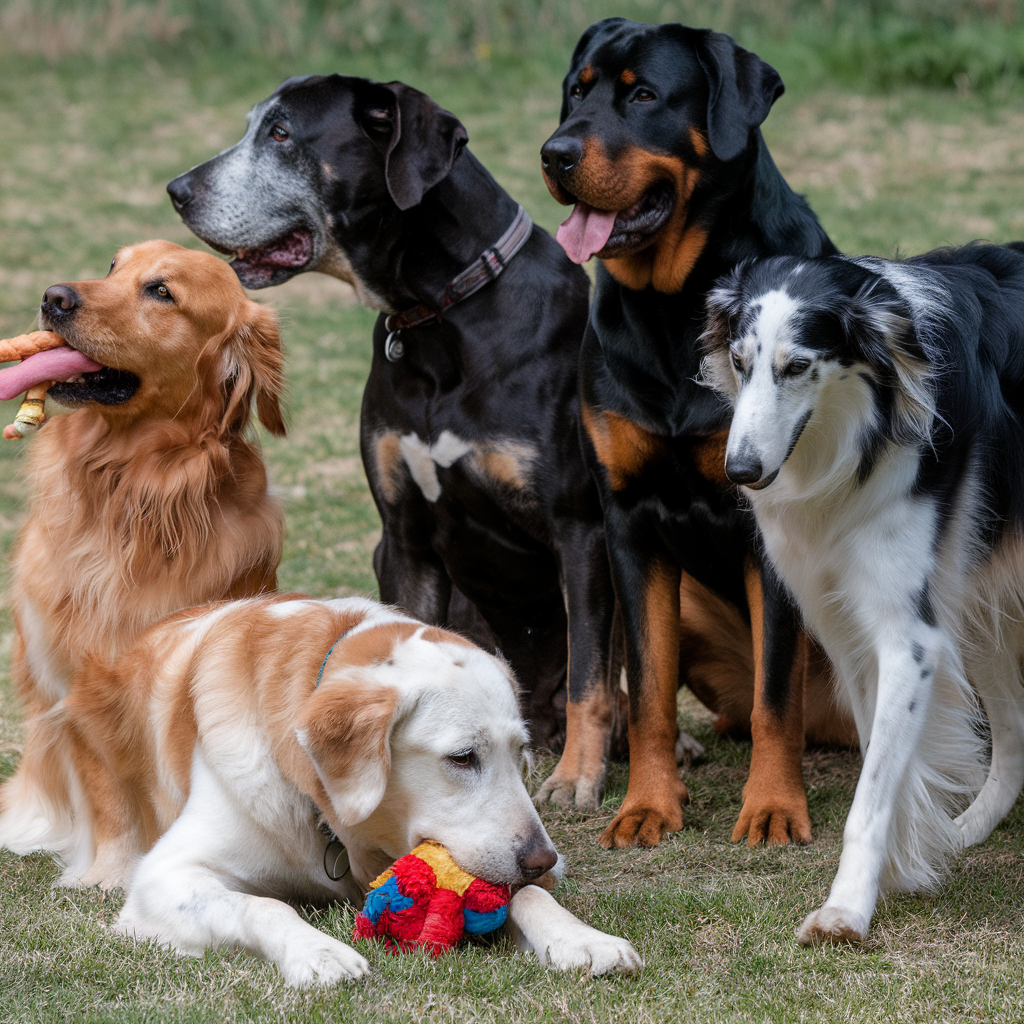
Gastric torsion, also known as gastric dilatation-volvulus (GDV), is a potentially fatal condition that primarily affects large and giant dog breeds. This disorder requires immediate veterinary attention to save the animal’s life.
What is gastric torsion?
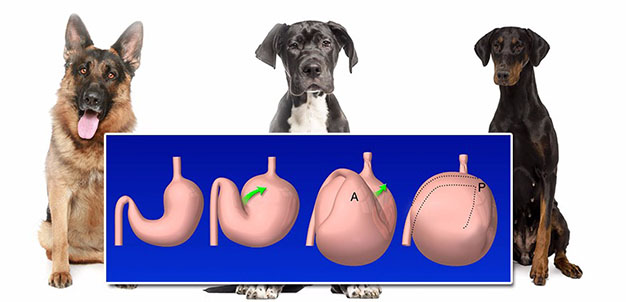
GDV occurs when a dog’s stomach dilates with gas, liquid, or food, and subsequently rotates on its own axis. This rotation blocks the entry and exit of the stomach, preventing the release of its contents and compromising blood circulation in the organ and surrounding tissues. If untreated, it can lead to gastric tissue necrosis, shock, and ultimately, the animal’s death.
Risk factors
Several factors increase the likelihood of a dog developing GDV:
- Predisposed breeds: Large or giant breeds, such as Great Danes, German Shepherds, Irish Setters, and Saint Bernards, are at higher risk.
- Deep chest: Dogs with a narrow and deep chest are more prone.
- Age: GDV is more common in older dogs.
- Feeding: Eating quickly, consuming large amounts of food in one sitting, or eating high-fat foods can contribute.
- Exercise: Vigorous exercise just before or after eating increases the risk.
Warning symptoms
Gastric torsion is a medical emergency, and recognizing the symptoms promptly can make a difference:
- Visible abdominal distension.
- Unsuccessful attempts to vomit.
- Excessive drooling.
- Restlessness, anxiety, or obvious pain.
- Difficulty breathing.
- Pale or bluish gums.
- Collapse.
Diagnosis
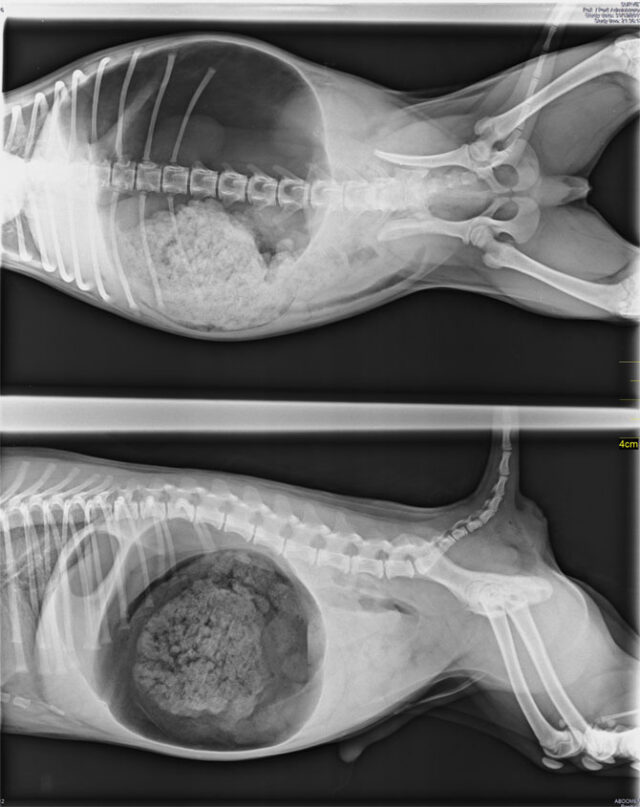
The diagnosis of GDV is made through a clinical examination and abdominal X-rays. These confirm the presence of dilation and rotation of the stomach.
Additional tests
To evaluate the animal’s general condition and possible complications associated with GDV, the following additional tests should be performed:
- Complete blood count: To identify alterations such as anemia, dehydration, electrolyte imbalances, or signs of sepsis.
- Arterial or venous blood gas: To assess acid-base balance and oxygenation.
- Electrocardiogram (ECG): Detects possible cardiac arrhythmias, common in dogs with GDV.
- Abdominal ultrasound: May be useful for assessing tissue viability and ruling out other abdominal issues.
- Blood lactate measurement: Elevated lactate levels (>6 mmol/L) may indicate tissue hypoxia due to reduced blood flow. A significant decrease in lactate levels after initial stabilization is usually associated with a better prognosis, while persistently high levels may suggest a higher likelihood of gastric necrosis and a worse outcome.
Treatment
The treatment of GDV requires immediate surgical intervention and intensive care:
- Initial stabilization: Administration of intravenous fluids to combat shock and gastric decompression through tubes or needles.
- Surgery: Involves returning the stomach to its normal position and removing any necrotic tissue. A gastropexy is also performed, attaching the stomach to the abdominal wall to prevent future recurrences.
- Postoperative care: Includes continuous monitoring, pain management, and handling potential complications such as infections or arrhythmias.
Prognosis
The prognosis of gastric torsion depends on several factors, including:
- Time of intervention: The earlier GDV is diagnosed and treated, the better the prognosis.
- Stomach condition: The presence of gastric necrosis significantly worsens the prognosis.
- Complications: Cardiac arrhythmias and sepsis are also associated with a worse outcome.
- Response to stabilization: A rapid improvement after decompression and fluid therapy is associated with better outcomes.
In general, the survival rate after successful surgery is between 70% and 90%. However, dogs that develop gastric necrosis or do not receive timely treatment have a guarded or unfavorable prognosis.
Prevention
Although the risk of GDV cannot be completely eliminated, some measures can reduce its likelihood:
- Divide the daily food intake into several small meals.
- Avoid intense exercise before and after meals.
- Provide a calm environment during meals to prevent the dog from eating with anxiety.
- For high-risk breeds, consider a preventive gastropexy during spaying or neutering.
Conclusion
Gastric torsion is a serious condition that requires immediate action. Recognizing the risk factors and warning symptoms is essential for ensuring a quick and effective response. If you suspect that your dog may be suffering from GDV, seek emergency veterinary attention immediately. Timely intervention can save your pet’s life.