
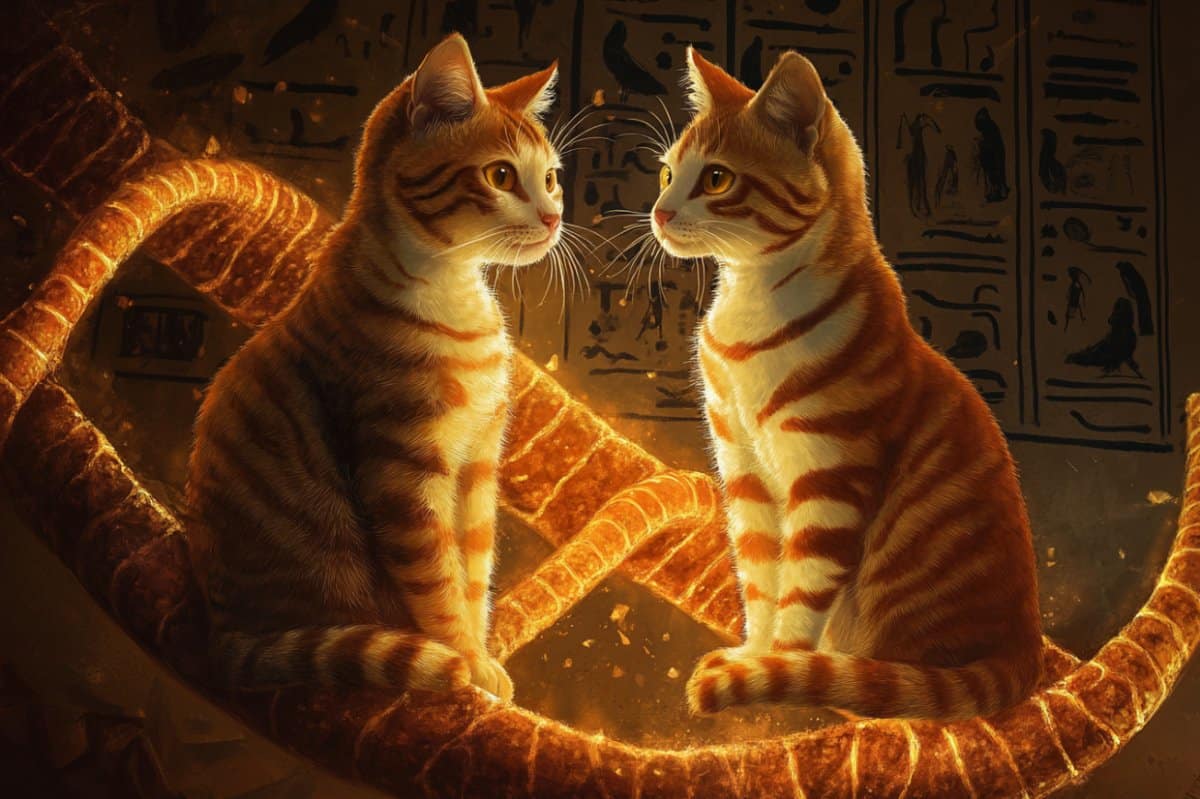
Researchers Identify Genetic Mutation Responsible for Orange Fur in Domestic Cats
Scientists at Kyushu University in Japan have identified the genetic mutation responsible for orange fur in domestic cats. The study reveals that a 5.1-kilobase deletion in the X-linked ARHGAP36 gene increases activity in melanocytes, the pigment-producing cells in the skin, resulting in orange coloration. This gene, located on the X chromosome, helps explain why orange fur is more common in male cats. Female cats with one copy of the mutation typically display calico or tortoiseshell patterns due to X chromosome inactivation. The mutation lies in a non-coding region, meaning the protein function is preserved, but gene expression is altered. This elevated ARHGAP36 activity suppresses other genes involved in melanin production, likely shifting pigment production from dark eumelanin to lighter pheomelanin. Researchers believe the gene may also influence other body systems, including hormonal and brain functions. This discovery supports long-standing theories and could have implications beyond feline genetics, including insights into human conditions like skin cancer. The study was conducted with the help of veterinarians and was confirmed by parallel research from Stanford University. Future plans include exploring the mutation’s origins and its broader biological impact.